Comparison
Birkenstock Boston Soft Footbed vs Arizona Soft Footbed: Which Pair Fits Your Daily Routine?
A practical Boston vs Arizona Soft Footbed comparison for fit, coverage, care, pricing, and daily wardrobe use.
Quick verdict
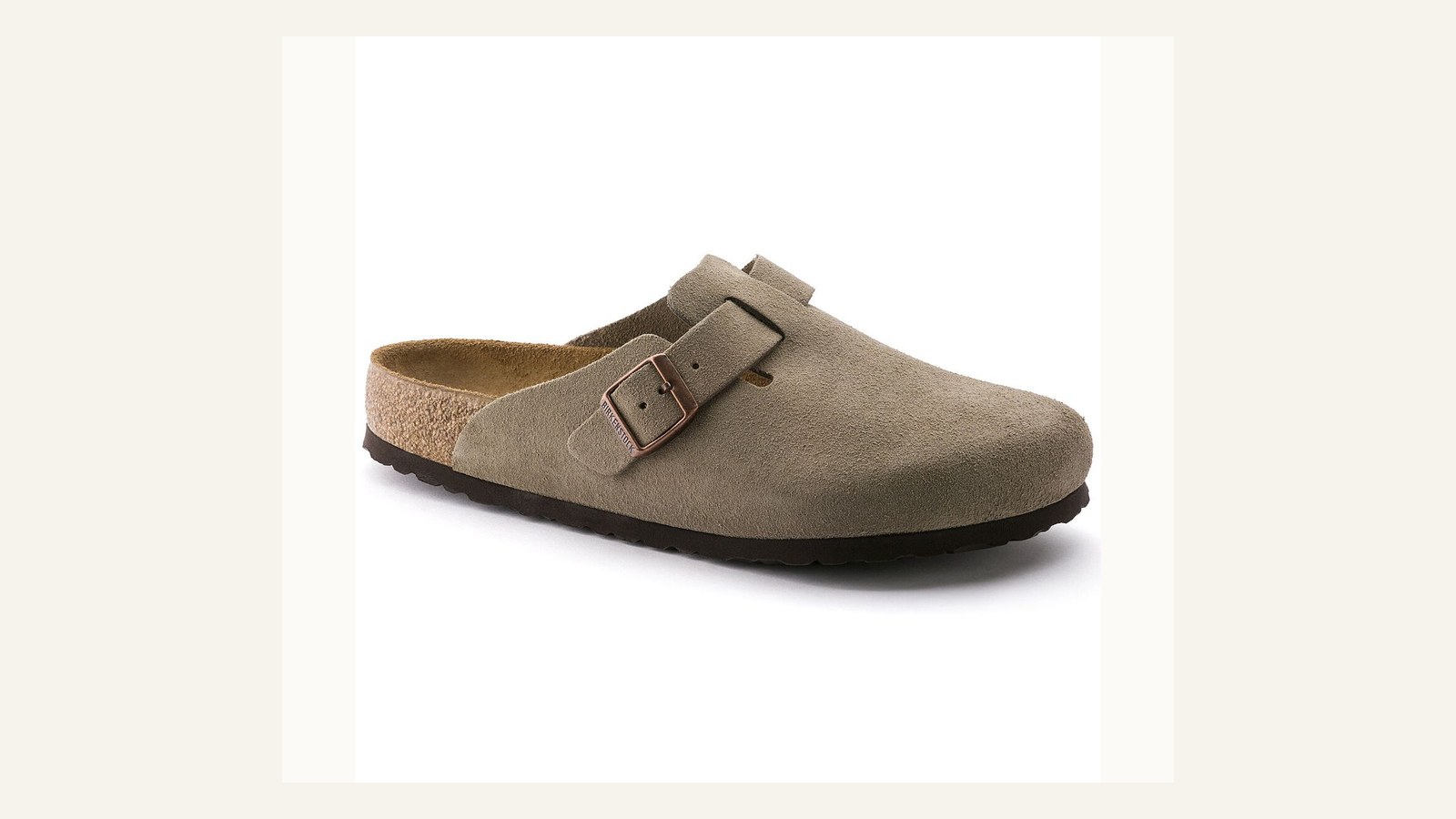
Choose Boston if you want a closed-toe, sock-friendly clog for year-round casual wear; choose Arizona if you want the airier, more adjustable two-strap sandal for warm weather and travel.
FTC disclosure: HighKey Basic may earn a commission if you buy through links on this page. Our editorial notes are based on official product pages, policy pages, and cited third-party editorial sources, not paid placement. Read more about our approach on our editorial policy page.
If you are down to the Birkenstock Boston Soft Footbed vs Arizona Soft Footbed, you are not choosing between two radically different footbeds. You are choosing how much coverage, airflow, strap control, and wardrobe range you want around the same broad Birkenstock idea: suede upper, cork footbed, EVA sole, and a shape that asks for a short break-in period instead of sneaker-style softness.
The practical answer is simple. Buy the Boston Soft Footbed if you want a closed-toe clog that works with socks, wide-leg pants, denim, and cooler days. Buy the Arizona Soft Footbed if you want the cleaner warm-weather sandal, easier airflow, and two-strap adjustability. Both need care around water and heat, and both deserve a fit check before you wear them outside.
Scope note: we did not conduct a lab test or long-term wear test for this article. Product facts come from Birkenstock's official pages, fit guide, care tips, return policy, and cited editorial sources. Prices were checked on July 6, 2026, and can change.
Birkenstock Boston Soft Footbed vs Arizona Soft Footbed: quick verdict
The Boston Soft Footbed is the more wardrobe-flexible pair if your closet leans toward denim, chore pants, socks, knitwear, or transitional weather. The closed front makes it feel closer to a casual shoe than a sandal, and that matters if you want one pair for coffee runs, flights, home wear, and weekend errands. Birkenstock's official Boston page lists the Taupe suede Soft Footbed version at $169.95, with Regular/Wide and Medium/Narrow widths available.
The Arizona Soft Footbed is the simpler warm-weather choice. It has the same broad comfort platform, but the two open straps make it cooler, easier to wear barefoot, and visually lighter. Birkenstock's official Arizona page lists the Taupe suede Soft Footbed version at $154.95. If you already own sturdy socks, heavyweight tees, or canvas bags from the basics side of your wardrobe, Boston blends into that rhythm. If you mostly need summer airflow, Arizona is cleaner.
For more wardrobe-basics context, see our guides to the Uniqlo Supima vs U Crew Neck T-Shirt and Darn Tough Hiker Micro Crew vs Light Hiker. Those two decisions pair naturally with the Boston-versus-Arizona question because socks, pant break, and tee weight change how Birkenstocks look and feel.
Comparison table
| Category | Boston Soft Footbed | Arizona Soft Footbed |
|---|---|---|
| Official price checked July 6, 2026 | $169.95 | $154.95 |
| Upper | Suede | Suede |
| Footbed | Soft footbed with integrated latex foam cushion | Soft footbed with integrated latex foam cushion |
| Insole / lining | Suede footbed lining / natural leather material details | Suede footbed lining / natural leather material details |
| Sole | Flexible EVA sole | Flexible EVA sole |
| Adjustability | One adjustable instep strap with metal pin buckle | Two adjustable straps with metal pin buckles |
| Coverage | Closed toe, open heel clog | Open toe, open heel sandal |
| Width options | Regular/Wide and Medium/Narrow | Regular/Wide and Medium/Narrow |
| Better use case | Socks, cooler weather, year-round casual outfits | Barefoot warm-weather wear, travel, casual summer outfits |
| Main care concern | Suede brushing, cork sealing, avoiding soaking and heat | Same care concerns, plus more exposed footbed in daily use |
| Return friction | 30-day online returns from Birkenstock US in original condition and packaging, with final-sale exceptions | Same policy |
Boston Soft Footbed: better when you want a casual shoe, not just a sandal
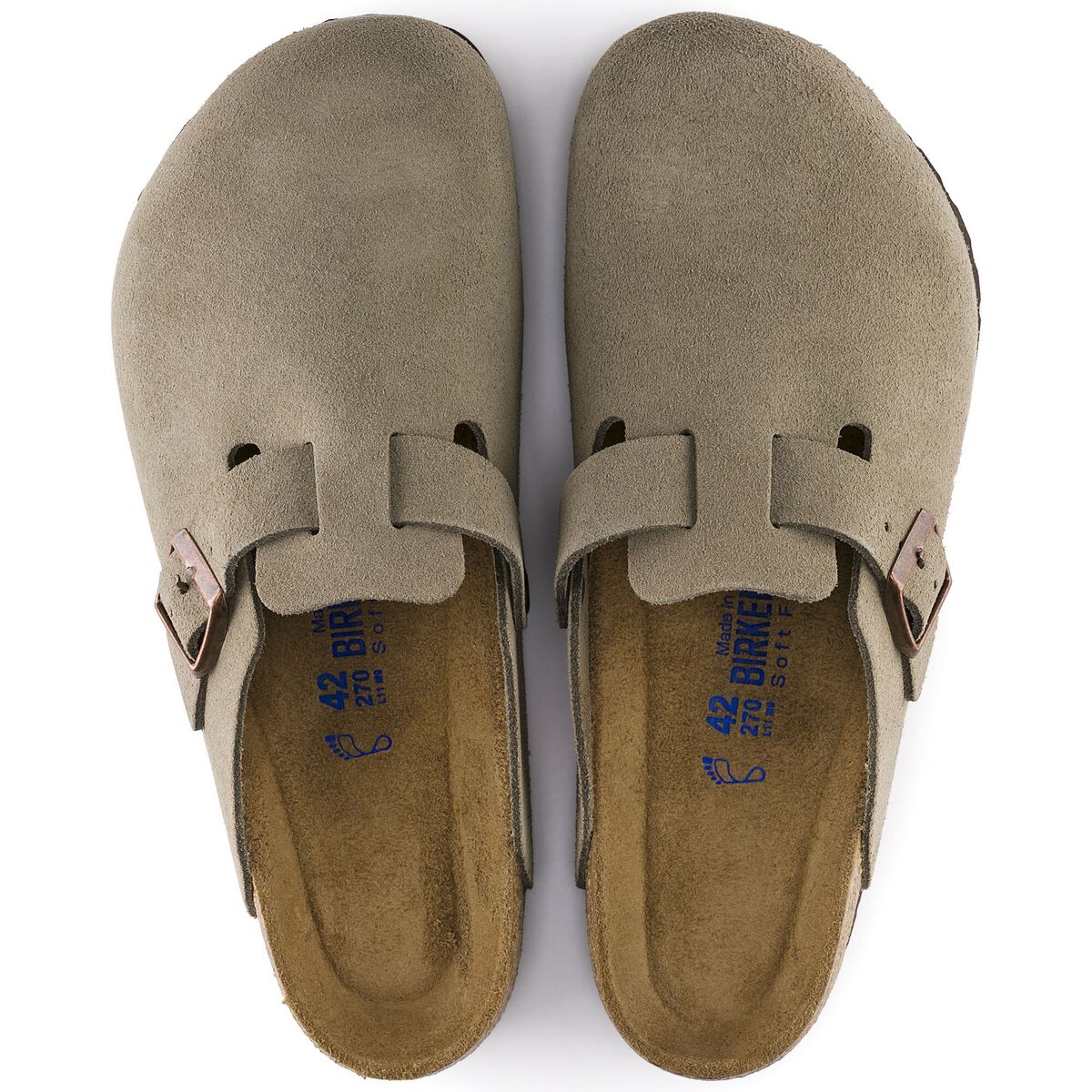
The Birkenstock Boston Soft Footbed suede leather page describes the Boston as a year-round clog with a classic suede upper, suede footbed lining, flexible EVA sole, and one adjustable strap. The important wardrobe detail is the closed toe. It covers enough of the foot to look intentional with socks, longer trousers, and cooler weather layers.
That makes Boston the more useful “daily uniform” choice if your basics skew relaxed: washed denim, fatigue pants, Oxford shirts, fleece, heavyweight tees, or merino socks. In GQ's long-term Boston review, the writer emphasizes the wide toe box, soft upper, sock compatibility, and the way the clog works across casual pant silhouettes. Treat that as a style-context signal, not a universal fit guarantee.
Fit-wise, Boston has one strap across the instep and no back strap. That means your heel is not locked in like a sneaker. If you size too large, the clog can feel sloppy; if you size too small, the footbed edge and toe box can feel unforgiving. Birkenstock's fit guide says to check that toes do not touch the edge and to aim for about 1/4 inch of space around the foot. That small margin matters more on Boston because the covered front can hide a bad size until you walk.
Boston is also the more protective choice for casual indoor-outdoor use. It does not make suede waterproof, and it is not a rain shoe, but the closed vamp keeps the front of the foot less exposed than Arizona. If you want a pair for travel days, chilly apartments, grocery runs, or casual office slippers where allowed, Boston earns the higher price.
Arizona Soft Footbed: better when airflow and strap control matter
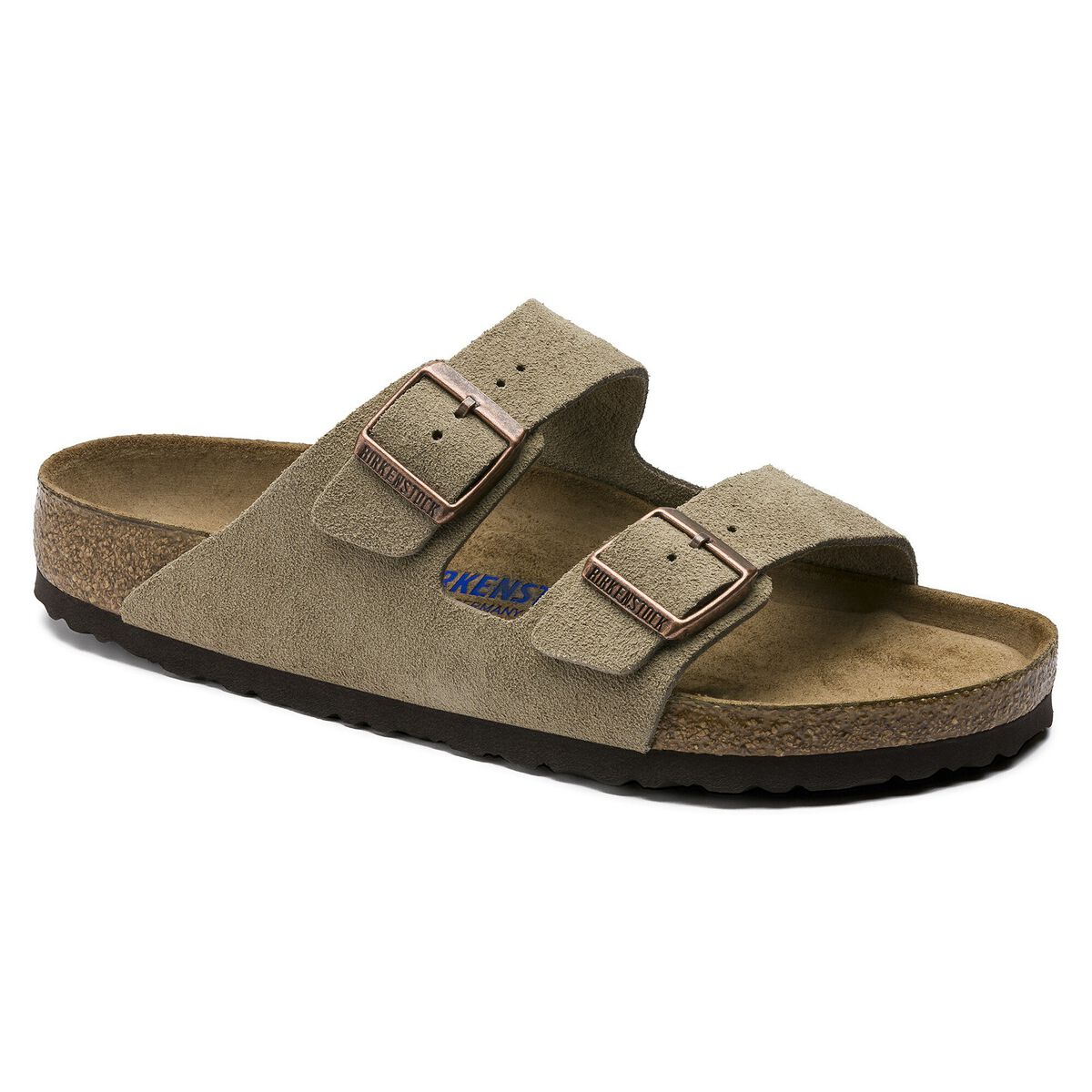
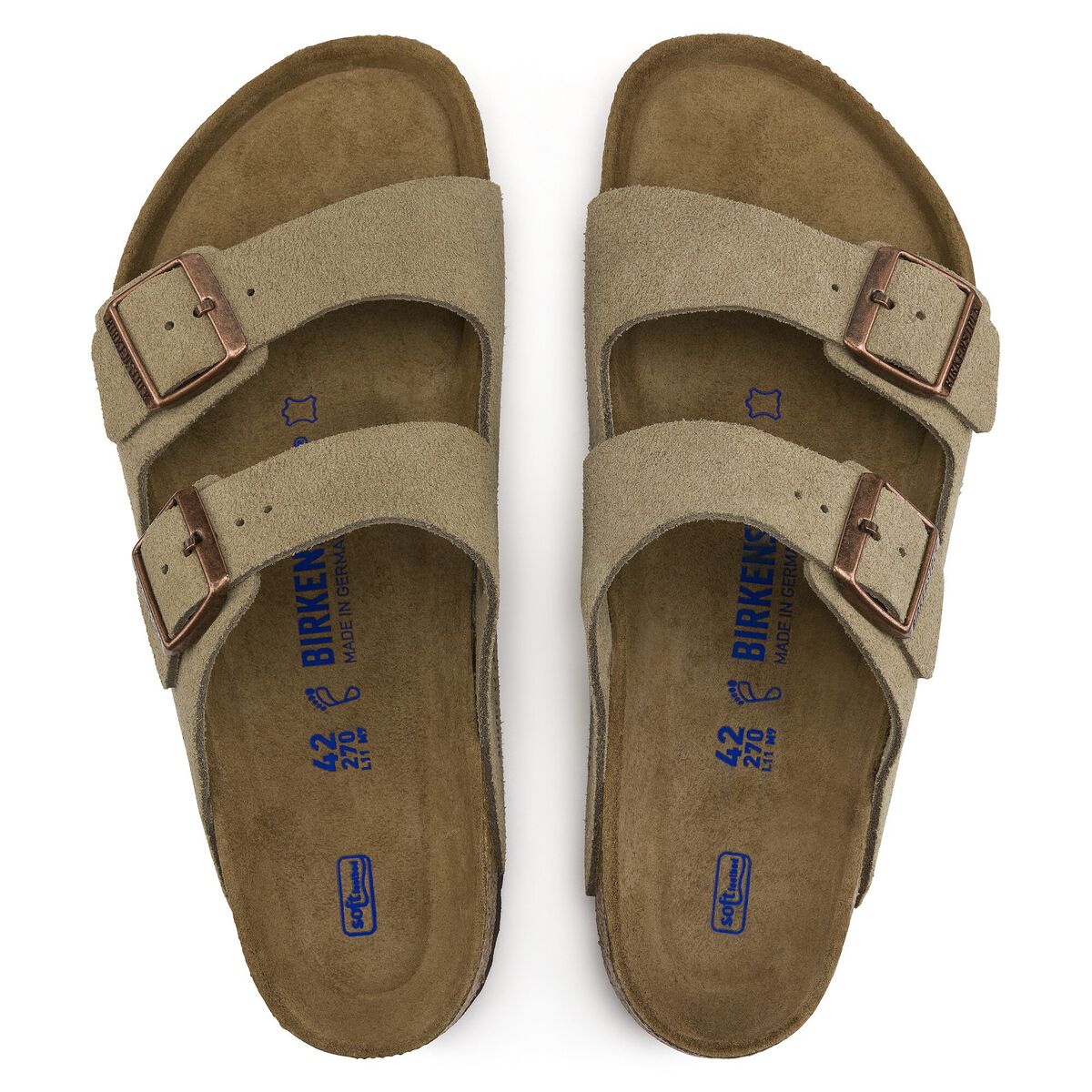
The Birkenstock Arizona Soft Footbed suede leather page lists the same core material story: suede upper, suede footbed lining, flexible EVA sole, and a soft footbed with extra cushioning. The difference is shape. Arizona is the classic two-strap sandal, and Vanity Fair notes that the Arizona model dates to 1973 and has stayed close to its original wardrobe-staple form.
Arizona is the better pick if you want less material around your foot. The two straps give you more adjustment over the forefoot than Boston's single instep strap, and the open front makes it easier to wear in hot weather. It is also easier to style with shorts, linen, relaxed summer trousers, casual dresses, and beach-town packing lists.
Good Housekeeping's Birkenstock sandal review frames Arizona-style sandals as useful for casual travel activities such as errands, sightseeing, and museum visits, while still noting that longer walking days may call for sneakers. That is the right expectation. Arizona can be comfortable and breathable, but it should not be treated as a technical walking shoe or rain sandal unless you choose one of Birkenstock's water-friendly EVA styles.
Arizona also exposes more of the footbed. That can be good for airflow, but it means sunscreen, sweat, dust, and summer grime hit the suede footbed more directly. If you want a lower-maintenance pool or beach sandal, this suede Soft Footbed version is not the easiest care choice.
Fit and sizing: start with EU size, then check width and space
Birkenstock's official fitting guide is more useful than guessing from sneaker size. The brand lists footwear in European sizes and gives a basic conversion formula: women's US size plus 31, men's US size plus 33. It also explains the width markings: outlined footprint for Regular, filled footprint for Narrow. Birkenstock says Regular suits medium to wide feet, while Narrow suits narrow to medium feet.
For both Boston and Arizona, the footbed edge is part of the design. The brand recommends checking that your toes do not touch the edge and aiming for about 1/4 inch of space around the foot. That is especially important if you are between sizes. Boston can feel loose if oversized because it has no heel strap; Arizona can feel easier to tune because two straps distribute adjustment across more of the top of the foot.
Break-in is also part of the purchase. Birkenstock advises flexing the footbed before wear, keeping straps loose at first, wearing the shoes around the house for one to two hours at a time, and gradually increasing wear. The Soft Footbed reduces the initial harshness with an integrated latex foam cushion, but it does not eliminate the need to confirm your size indoors before scuffing the sole outside.
If your feet are narrow, do not assume Regular/Wide is safer because it sounds more forgiving. A too-wide footbed can make the sandal feel less controlled. If your feet are wide or high-volume, do not assume Narrow will stretch enough to solve the issue. Pick the width first, then decide between the Boston's covered upper and Arizona's more adjustable open straps.
Material behavior and care friction
Both pairs use suede, cork, EVA, and a soft footbed structure, so the care rules are similar. Birkenstock's product material notes describe suede as soft and flexible, with a napped surface and high moisture absorption. That softness is part of the appeal, but it also means suede can show dirt, water spots, and nap changes faster than smooth leather.
The official Birkenstock care tips are clear on two points that should shape your decision. First, avoid extreme heat. Cork footbeds and EVA soles can be damaged by concentrated heat or high temperatures, so leaving them in a closed hot car or near a heater is a bad idea. Second, most non-water-friendly styles should not be immersed in water. Over-saturation can affect sealant materials and change the look and finish.
For Boston, the suede upper is larger and more visible. If it gets stained, the whole shoe reads more worn. For Arizona, the footbed is more exposed to sweat and outdoor dust, so the top surface can look used quickly in summer. Birkenstock recommends using cork sealer when the exposed cork looks dry, cleaner/refresher for the footbed, water and stain repellent for leather, suede, and nubuck uppers, and a suede/nubuck brush to restore the nap.
If you are low-maintenance, choose by failure mode. Boston asks you to care about the upper. Arizona asks you to care about the exposed footbed. Neither is the right pair if you want something to rinse off after rain, sand, or pool water.
Price and return-policy friction
On July 6, 2026, Birkenstock US listed the Boston Soft Footbed suede Taupe at $169.95 and the Arizona Soft Footbed suede Taupe at $154.95. That $15 difference is not large enough to make the decision by price alone. Boston gives you more upper coverage and a year-round look; Arizona gives you a lighter sandal and two-strap adjustment.
The more important money issue is return friction. Birkenstock's US return policy says footwear and accessories bought from the US site may be returned or exchanged free of charge within 30 days of delivery if they are in original purchase condition and packaging. Last Chance items discounted 40% or more are final sale. Online purchases must be returned online, not to a Birkenstock store or authorized retailer, and original shipping charges are not refunded.
That policy makes indoor try-on discipline important. Do not wear either pair outside until you have checked width, EU size, strap comfort, and footbed spacing. If you are buying a sale color, check whether it is final sale before assuming you can exchange it.
Wardrobe scenarios: who should choose which?
Choose Boston if your daily clothes include socks, jeans, chinos, chore pants, overshirts, hoodies, or relaxed tailoring. Boston works better when a sandal would feel too exposed but a sneaker feels like too much. It also pairs naturally with other practical basics: merino socks, a structured canvas tote, and simple tees. For those adjacent decisions, see our L.L.Bean Boat and Tote Open-Top vs Zip-Top comparison and Darn Tough sock comparison.
Choose Arizona if your main use is warm-weather errands, travel packing, patio dinners, beach-town outfits, or easy indoor-outdoor summer wear. It is visually lighter and more breathable, and the two straps make fit adjustment more obvious. If your accessories lean minimal and practical, Arizona sits closer to the same warm-weather lane as the Uniqlo Round Mini Shoulder Bag vs lululemon Everywhere Belt Bag decision.
Choose neither suede Soft Footbed pair if you need waterproof convenience, heavy walking stability, or a shoe you can ignore after bad weather. For rain, beach, or pool use, look at Birkenstock EVA styles instead of suede. For full-day city walking, compare against supportive sneakers, not just another sandal.
Bottom line
If you want one pair that can move through more months of the year, Boston Soft Footbed is the stronger wardrobe-basic choice. It costs slightly more, but the closed toe, sock compatibility, and clog shape make it more useful outside peak summer.
If you want a lighter warm-weather sandal, Arizona Soft Footbed is the cleaner choice. It is less covered, easier to adjust across the forefoot, and simpler to pack for hot-weather travel.
The real deciding question is not “Which Birkenstock is more iconic?” It is where you will actually wear it. Boston is for covered-foot casual wear. Arizona is for open-foot airflow. Get the EU size and width right first, try them indoors, and treat suede and cork like materials that need care.
FAQ
Is the Birkenstock Boston Soft Footbed more comfortable than Arizona Soft Footbed?
Not automatically. Both use Birkenstock's Soft Footbed construction with an integrated latex foam cushion. Comfort depends more on sizing, width, strap placement, and whether you prefer a covered clog or an open sandal. Boston may feel more secure over the front of the foot, while Arizona gives more airflow.
Does Boston or Arizona fit wider feet better?
Both are offered in Regular/Wide and Medium/Narrow on the official product pages checked for this article. Birkenstock says Regular is for medium to wide feet and Narrow is for narrow to medium feet. Start with width, then choose style. Arizona's two straps give more top-of-foot adjustment, but Boston's upper may feel better if you dislike exposed toes.
Can you wear Birkenstock Boston without socks?
Yes, but Boston often looks and feels natural with socks because of its closed-toe clog shape. Without socks, suede contact and footbed break-in matter more. If your priority is barefoot summer airflow, Arizona is the more obvious choice.
Is Arizona Soft Footbed good for travel?
Arizona can be useful for casual travel, hotels, errands, sightseeing, and relaxed warm-weather outfits. It is not the same as a supportive walking sneaker for long mileage days. If you expect rain, sand, or pool use, suede Soft Footbed is not the most forgiving material choice.
Are Birkenstock suede Soft Footbed pairs waterproof?
No. Birkenstock's care tips say most styles should not be immersed in water, and over-saturation can affect sealant materials and change the look or finish. Use water and stain repellent, brush suede and nubuck, and let wet shoes air dry away from direct heat.
Should I size up or down in Boston or Arizona?
Use Birkenstock's EU size guide first, then test indoors. The brand recommends checking that toes do not touch the edge of the footbed and aiming for about 1/4 inch of space around the foot. If you are between sizes, Boston can punish going too large because it has no heel strap.
Title Candidates
- Birkenstock Boston Soft Footbed vs Arizona Soft Footbed: The 7 Tradeoffs That Matter
- Boston or Arizona? A Practical Birkenstock Soft Footbed Fit Comparison
- Before You Buy Birkenstock Soft Footbed: Boston vs Arizona for Daily Wear
- The Closed-Toe vs Two-Strap Birkenstock Decision, Explained
- Birkenstock Boston vs Arizona: Which Soft Footbed Pair Fits Your Wardrobe?
Sources
- Birkenstock Boston Soft Footbed Suede Leather product page
- Birkenstock Arizona Soft Footbed Suede Leather product page
- Birkenstock Fit and Size Guide
- Birkenstock Care Tips
- Birkenstock US Return Policy
- GQ Boston review
- Good Housekeeping Birkenstock sandals review
- Vanity Fair history of the Arizona
For how HighKey Basic separates source-backed notes from hands-on testing claims, see About HighKey Basic and our editorial policy.